by Dr. Emily A. Snowden
The act of giving birth to a child is daunting but fascinatingly beautiful. This natural process requires ever-shifting amounts of mental and physical strength, as well as an ability to be led by both self-knowledge and selflessness. Modern research on childbirth is also amazing and has contributed to some life-saving medical advancements. Yet, the science also reveals birth as a deeply personal and complex cascade through a neuro-psycho-social event that we cannot oversimplify with ration.
Technically putting the birther in an “altered state,” this process impacts our brain structures and brain chemistry (including neurotransmitters, hormones, and brain waves), displaying how the moment-to-moment intelligence of this natural process can still evade our most advanced methods.
Despite the fact that childbirth and menstruation are some of the only times we see blood without violence, the realities of birth make us squeamish. From the second we see the mucus plug it becomes a cascade of familiar and unfamiliar bodily fluids and physical pain (though most birthers will agree few things compare to the pain of that fundal ‘massage’ in the hours that follow). But when developed humans cannot get past their entitlement to constant psychological comfort and process this learned shame, what happens?
Like much of motherhood, birth becomes a horrible secret that takes on much of the darkness that is forced on it in the shadows. And, like many of the world’s most impactful bits of knowledge, these stories of how we sat in ceremony to bring new humans into this world are only told through whispers between women.
How did we get here? And better yet, what do we lose when we do this?
Once again, let’s shine some light on it as we unpack together.
Birth as a Human Reality
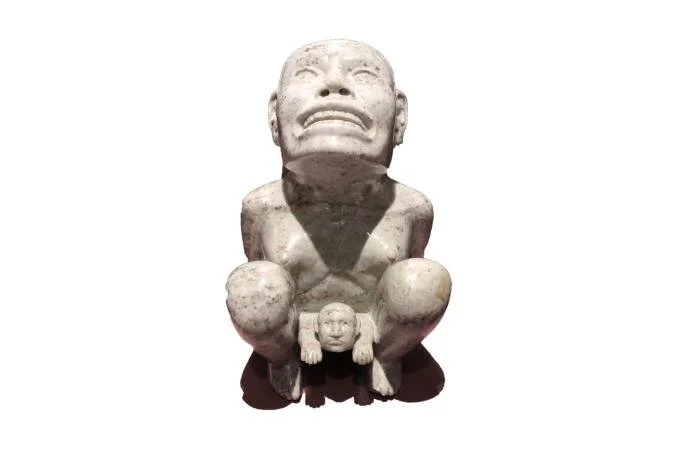
Tlazolteotl (Birthing Figure) (c. 900-1580). Retrieved from: https://www.wikiart.org/en/aztec-art/tlazolteotl-birthing-figure
Throughout human history, we see birth as a tenant of mythos, art, and general storytelling, as well as a symbol of the archetype of the “Great Cosmic Mother.” However, whether we sensationalize it or revere it, every day people give birth and they always have. It’s not just a hypothetical we project ourselves on or a symbol of potential for our art, but a lived experience with emotions, bodily sensations, and external realities at play.
There are many phases throughout birth, each requiring different sets of strength from the birther. Often throughout human history, those who provided this great service to us all were approached with respect and reverence in many of the stories we tell about this miraculous bit of our humanity. For example, Aztec culture categorized birthers as warriors:
Given the risks associated with childbirth, women did not usually take on this tremendous task alone (an approach we recently learned we share with our mammalian cousins, sperm whales, who also give birth with a team). While the team each birther assembles around themselves can include relatives, friends, pets, doulas, and more, historically speaking most births were attended professionally by midwives.
The Role of Midwifery in Human Birth
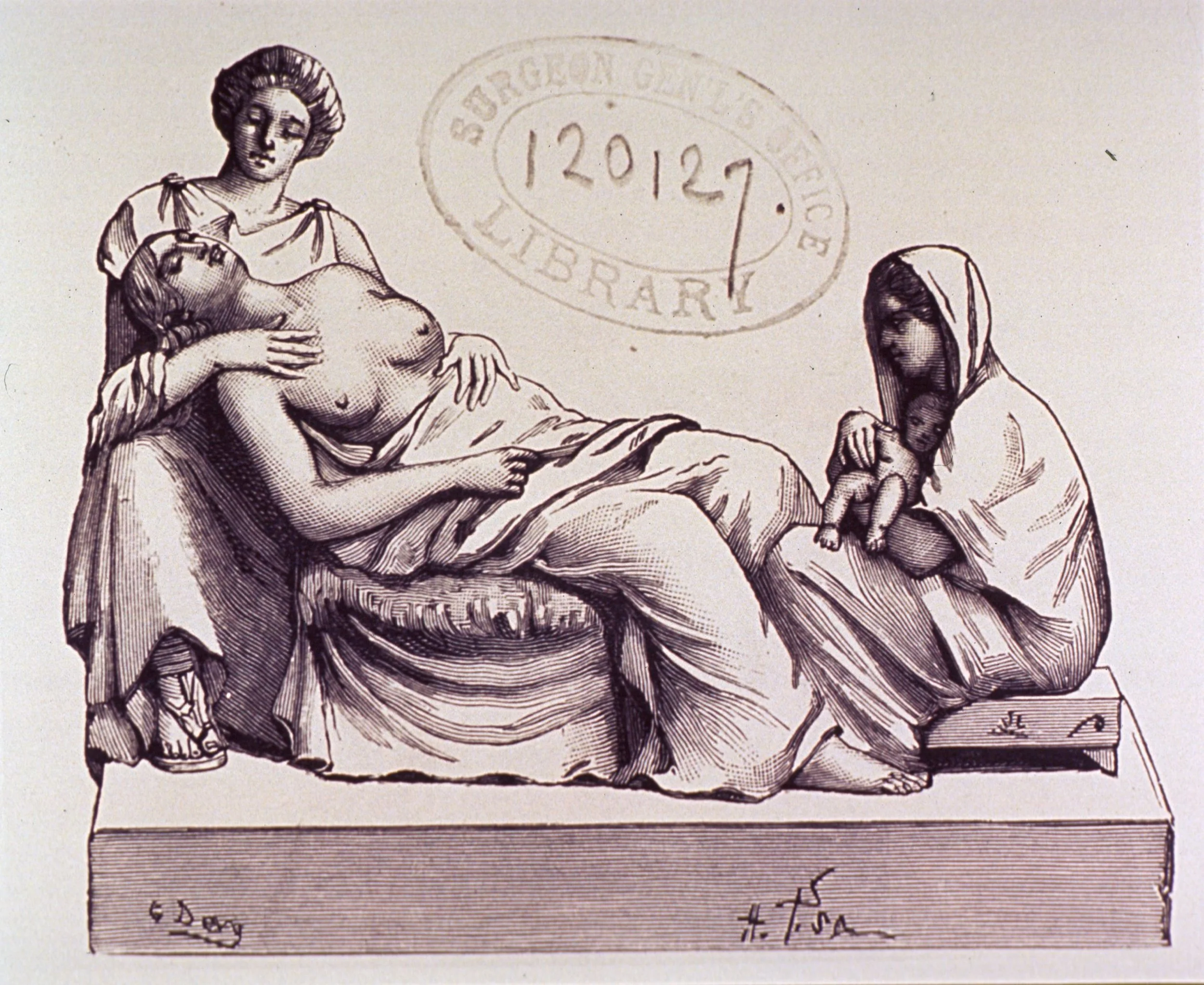
A wood engraving depicting an assisted birth in ancient Greece; part of: Histoire des accouchements chez tous les peuples, t.p. vignette (1887). Retrieved from: https://collections.nlm.nih.gov/catalog/nlm:nlmuid-101449273-img
Philosophers, artists, and religious leaders have long speculated about human birth and represented it symbolically. However, the individuals who had lived experiences and expertise in the area of assisting births were the women called midwives, sages, “wise women,” or “Grannies.” Though they have been called different names and enacted the work somewhat differently, midwifery is one of the oldest professions in human history and has typically been done by women whose training for the role came from an apprenticeship. From the Birth Injury Help Center’s History of Childbirth:
“Midwives knew about herbal remedies that could help pregnant women with a multitude of problems. They knew how to set up a room and position a woman for birth. If the baby was in the wrong position, midwives knew how to turn them. They would check the position of the baby by feeling the woman’s stomach and check how far the woman was dilated. Using oiled hands, they would help stretch the woman’s tissues before delivery. After a child was born, they would stick around for about a month to help the mother with skills like breastfeeding.”
We know midwives often traveled to and between the homes of the people who they were supporting before, during, and after childbirth. Yet, we do not have much recorded history of this vast and important professional role. According to Venay Uecke, C.N.M., OHSU“...a lot of [the history of midwifery] has been erased through the powers and forces reflective of racial, political, gender, and socioeconomic oppression.”
Worse even than our dismissal of the pivotal role they play to humanity itself, midwives have actually been demonized thanks to their knowledge of birth and death. Most notably, midwives are heavily focused on in Malleus Maleficarum (1486), also referred to as the “Hammer of Witches.” In this resource, which merged theology and law to reposition various forms of folk wisdom as demonic heresy, accused midwives of atrocious crimes against not only “the church” but infants themselves. This “guidebook for identifying practitioners of the magical craft…caused an increase in hunts for witches, their resulting trials, tortures and tens of thousands of deaths by burning, hanging, and drowning throughout Europe and in colonial America.” While there is evidence healers, “wise women,” and midwives were persecuted in these witch-hunts (which would last into the 18th century) the exact number of casualties is unknown.
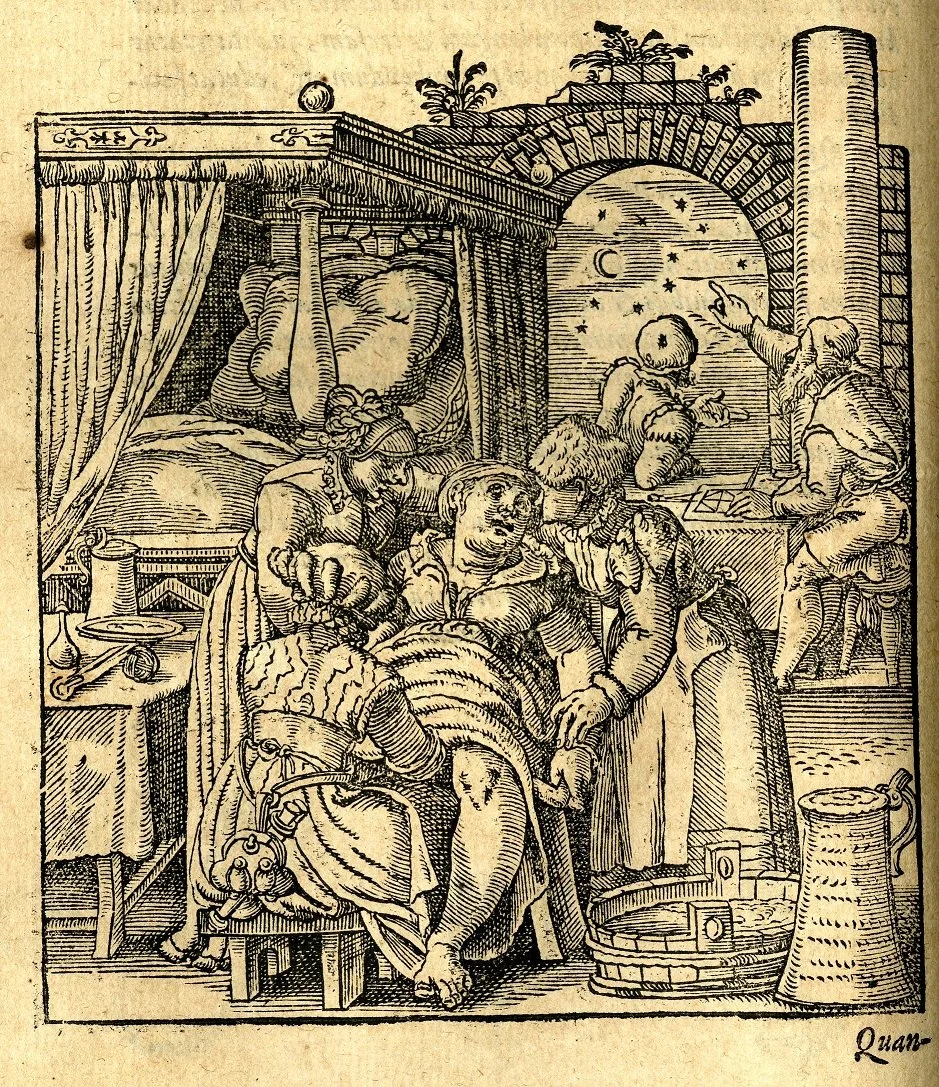
“In this illustration, midwives and astrologers practice their arts side by side, from the 1580 edition of Jakob Rüff’s popular Renaissance midwifery book, De Conceptu et Generatione Hominis.” Retrieved from: https://guides.library.uab.edu/c.php?g=1048546&p=7609202
As the witch-hunts faded out, the field of obstetrics was on the rise. With this newfound interest in birth, these practicing “medical professionals” launched campaigns against midwifery, insisting that pain relief, efficiency (less time birthing), and “Western science” were superior to midwife-assisted ceremonies of childbirth. Increasingly (thanks to individuals like Dr. Joseph DeLee), the process of birth became defined by the use of tools like forceps, sedatives, and other medical interventions. “By the turn of the century, they attended approximately half of births, despite having little training in obstetrics.” As this persisted into the 20th Century, it gave way to movements like “Twilight sleep” that changed how we thought of birth, with pharmaceutical cocktails promising efficient and “pain free” childbirth (though it’s notable this did not start with the absence of pain, but rather the memory of the pain).
Yet, still in rural areas birthers depended on midwives for care. “In the Southern [United States], Black midwives, sometimes called “granny” midwives, attended up to 75% of births until the 1940s.” However, when the Shepphard-Tower Infancy and Protection Act became a federal law in 1921, midwives were no longer able to practice in many states, especially outside of a hospital. In Alabama, almost 150 “Granny midwives” were disenfranchised from their profession overnight.
So began the rise of the “nurse-midwife,” a role that required medical training. Though some praised this change, it was at the expense of midwives of color who would not be granted access to these programs or allowed to practice if apprentice-trained. In the words of Uecke:
“Denying education to midwives of color has had a lasting effect on communities that relied on them for care. Today, less than 5% of midwives in the United States are people of color. Disparities in maternal morbidity and mortality rates are striking; Black mothers are 2-3 times more likely to die in childbirth than white mothers. This impact is a reflection of the powers and forces that disconnected midwives from their communities.”
Midwifery Today
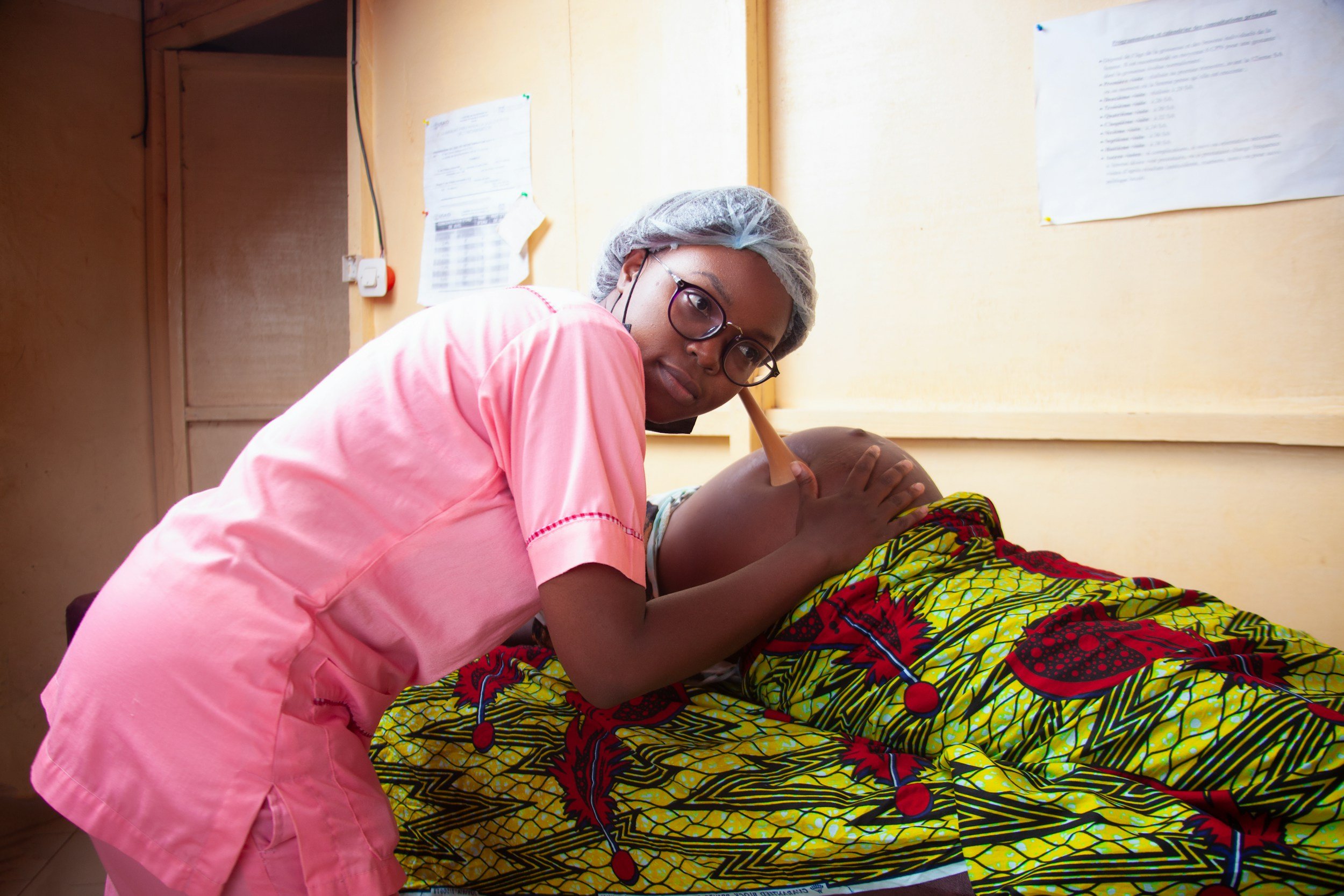
A midwife examines a person who is preparing to give birth.
In 2024, the World Health Organization (WHO) published a global position paper titled “Transitioning to Midwifery Models of Care.” In this resource, experts advocate for:
“...reorientation of health systems away from the currently prevalent fragmented and risk-oriented model of care to a midwifery model of care in which women and newborns, starting from pre-pregnancy and continuing all the way through the postnatal period, receive equitable, person-centered, respectful, integrated and high-quality care, provided and coordinated by midwives working within collaborative interdisciplinary teams.”
This recommendation is founded on research that shows our newest approach to birth–despite the presence of many medical advancements–has done little to minimize rates of maternal and neonatal deaths globally. While access to care and sex education are major contributing issues, WHO states that the “overmedicalization of pregnancy and childbirth has escalated in recent decades contributing to further poor quality of care and unfavorable outcomes for women and newborns, and posing a barrier to achieving universal health coverage (UHC).”
Reapproaching Birth

Mangrove roots arch into the ocean.
Normally I have some really solid, readable, evidence-based takeaways. However, here I offer this insight in the form of a strange but important anecdote about my own experience giving birth:
When I was exactly one week away from giving birth to my daughter, I had a vivid dream that began with me standing on an island facing out at the ocean where I could see three sister mountains centered in the distance. On my right, there was a tall, sandy cliff. On my left, there was a hedge of mangroves that were lining the water, with one fallen tree’s roots curving to create an inviting hot pool at the shore.
As I stood there, kind strangers approached me with tips on inducing labor. One particularly excited man instructed me to come with him up the large, sandy cliff and help judge a contest where joyful children of all ages were racing from the ocean to the shore.
I agreed, as I was willing to try anything. But, I found that it took everything in me to get up that cliff. The hill was steep, I was winded, my belly was so heavy, and the sun was becoming too intense. However, the man kept softly yet energetically turning around and checking on me, encouraging me as we both continued to climb.
When we finally reached the top of the cliff, I joyfully watched the children finish their races. I laughed as they bickered and negotiated about the outcome. It was then that the man who was helping me cautiously let me know that things were about to get more challenging.
In this next stage of the journey, he said I would need to jump off the cliff, through a hidden waterfall, and onto a sandpile he had prepared below. This made me scared but I was trying to trust, and was encouraged by the fact that with each jump my landing never hurt. Each time I’d climb back up after, exhausted and skeptical, but still willing to push past the fact that I didn’t actually want to and keep trying. As I persevered, I thought to myself, “Isn’t this what motherhood is about?”
After jumping and climbing many times to no avail, I couldn’t take it any longer. I nervously decided I would try to communicate that while I appreciated his enthusiastic help, I couldn’t complete another jump. However, as I went to form the words, he started speaking first and said, “Do you know that part of the reason I have you doing this exercise is so you can truly appreciate the view of the sunset from the top of the cliff?”
From my journal, “The view was beautiful–coral, teal, burnt orange, and some lavender with the three sister mountains off in the distance. I began to get lost in it when someone appeared behind us and began shouting.”
It was an elderly woman who had limped up the cliff with her large cane. She looked right past me and went off yelling at the man for having me jump, telling him despite his best attempts he did not know what was best for me. She listed the myriad reasons this was the wrong approach to my situation with a kind of frustration and conviction that I knew well, as I had heard it in my own grandmother’s voice many times.
The man and I turned to each other in a bit of childish laughter, with him gesturing a quiet apology to me. However, this made the woman even angrier, and this time she started yelling at me!
“You think you’re not in trouble?” she said, as she ordered me back down the cliff.
As she marched me back down to the shore, she spoke out loud to herself about how angry it made her to be ignored, despite the fact that she would still have to show up and clean up these kinds of ridiculous messes. I stayed as quiet as I could, only giving her the responses she demanded.
When we finally made it down, she walked me over to the hot pool and said that what I needed to do was sit among the fallen mangroves. Here, I could focus on staying calm and present. She told me that she was mad at me because we both know that I already knew this, but she wouldn’t discuss it with me any longer as now was my time to sit in peace.
Once I climbed in the hot pool, all I could do was laugh because it did feel much better floating there in the shade. My belly wasn’t heavy, I could catch my breath, and funny enough–I had a better view of the sister mountains from there.
I woke up shortly after.
Within days of receiving this insight, I was diagnosed with preeclampsia and triaged. For days my midwife team calmly and fiercely monitored my condition as they made different attempts to induce labor with my very stubborn little infant. All the while, my doula crafted calmly at my side, supporting me and encouraging me to cry into my husband’s shoulder each time I needed to mourn my situation (though never without the beautiful reminder to “bless it and make it sacred”).
My labor, when it finally came, was not easy. Hours upon hours I had to endure until finally she was born during a beautiful sunrise–one that replaced the light of the full moon with a golden coral glow. I felt so elated and so relieved, until my health came into question once again.
While still avoiding many of the tragedies that come with the diagnosis I received, my daughter was cleared to leave the hospital before I was. And, while I’m sure I’m still standing too close to it to really process and name the primal fear that came with the experience, I do know for certain that without the incredible midwife-led team I surrounded myself with, my outcome could be very different.
It’s hard becoming a mother–harder when you realize you could exchange your own life in the process. We don’t thank our mothers for that, maybe because we don’t know their stories. But, the teams who surround them do.
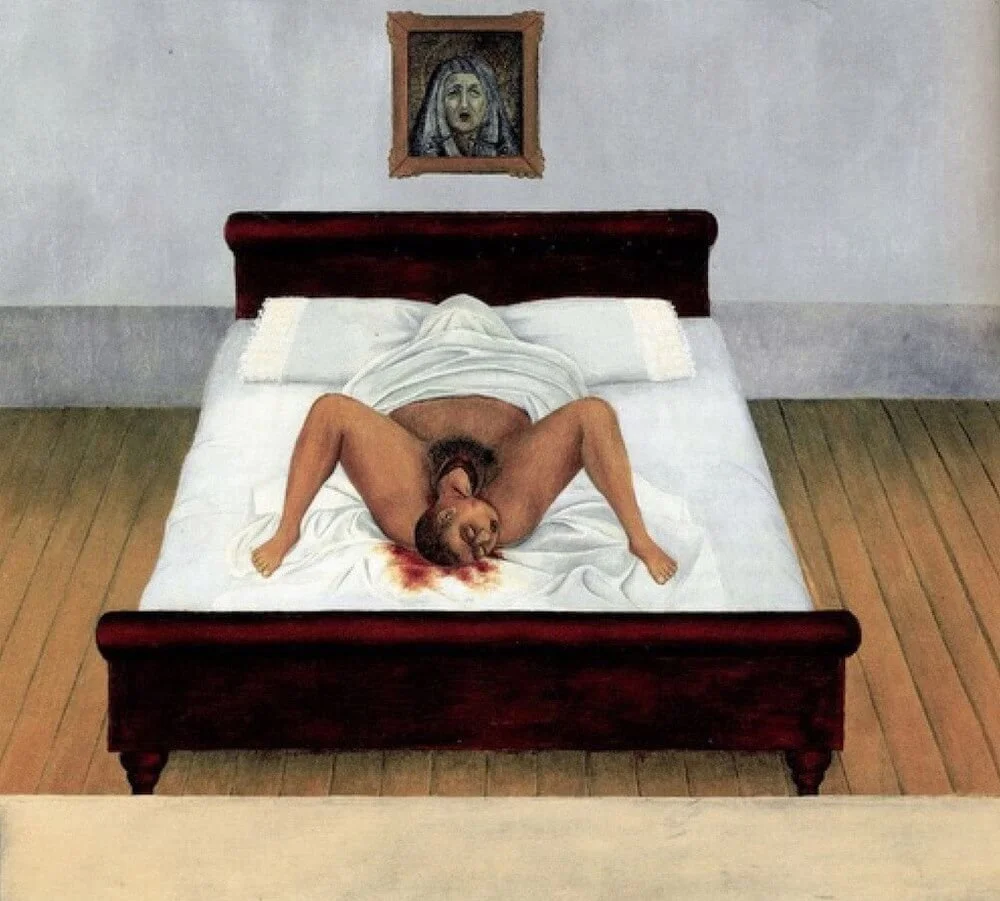
“My Birth” by Frida Kahlo (1932). Retrieved from: https://www.fridakahlo.org/my-birth.jsp
Bringing It Together
Childbirth is absolutely beautiful, but it can and does take lives alongside those it makes. This truth about birth cannot be fearfully co-opted as the rest of it hides in the shadow of shame that society cast over it some hundreds of years ago at the urging of those most newly interested in this human phenomenon. We need to have some respect, and better yet some guts. The act of childbirth is our most human behavior and those undertaking it deserve softness and awe from the rest of us.
When women are journeying through the stages of bringing a child into the world, they deserve to be seen and supported in ways that are meaningful to them as individuals. This can happen in homes, hospitals, birthing centers, pools of water, and more. It can happen with music playing, laughter, screaming, or in complete silence. No matter the setting or conditions, as they ascend through each step, we must listen to them tell us how we can ceremoniously “bless it and make it sacred.” Partners, family members, friends, doulas, nurses, obstetricians, lactation consultants, pediatricians, early caregivers, community members, and especially midwives each serve important roles in listening to the birther as they cascade through this deeply personal journey and shine this new light in the world.
Sure, childbirth feels primal, but thank goodness for that! Let it remind us what we really are made of.
Additional Resources
(Lamaze International) Black History Month: The Importance of Black Midwives, Then, Now and Tomorrow. https://lamaze.org/Connecting-the-Dots/black-history-month-the-importance-of-black-midwives-then-now-and-tomorrow-1
(Whapio Diane Bartlett) Beyond Biology: The Holistic Stages of Labor. https://www.birthflowerdoula.com/blog/the-holistic-stages-of-labor-by-whapio-diane-bartlett
(Natalie Lennard) The “Birth Undisturbed” project. https://www.birthundisturbed.com/exhibition